The average click-through rate for emails stands at 2.6 percent, while direct mail enjoys a return rate of approximately 5 percent. Conversely, a successful social media campaign typically converts at less than 1 percent.
The reason for these relatively low numbers lies in the absence of thorough customer research, ideal client personas, personalisation, and segmentation in many new marketing endeavours. These campaigns often rely on casting a wide net to see if any potential leads take the bait.
Recognising the significance of factors such as customer research, ideal client personas, personalisation, and segmentation, account-based marketing (ABM) emerges as an excellent opportunity. ABM offers a targeted approach to identifying and attracting ideal clients who provide consistent revenue month after month, representing the type of client every business aims to secure.
What Is Account Based Marketing (ABM)?
Account based marketing is a B2B strategy wherein sales and marketing collaborate to identify the most qualified accounts for customer acquisition. Unlike traditional marketing targeting a broad audience, ABM tailors efforts to individual key accounts. This approach involves personalised communication and content creation addressing the unique challenges and goals of each targeted account.
By closely aligning marketing efforts with specific targets, ABM fosters stronger relationships, increasing the likelihood of successful conversions and long-term partnerships. It proves most beneficial for businesses with smaller, niche customer bases or high-value clients, prioritising quality over quantity in customer interactions during extended sales cycles.
Examples:
Account based marketing (ABM) is a B2B strategy focused on creating personalised buying experiences for high-value prospects.
Examples of ABM tactics include webinars, live events, PPC, and email marketing. ABM benefits include aligning marketing and sales, shortening the sales cycle, saving time and money through personalisation, and facilitating easier ROI measurement. ABM differs from traditional sales funnel marketing in its targeted, precise, and cost-effective nature.
Examples of Account-Based Marketing:
ABM campaigns are designed for highly specific audiences, allowing for unprecedented customisation. Examples of ABM tactics could include:
- Webinars
- Live Events
- PPC and remarketing
Account Based Marketing vs Traditional Sales Funnel:
ABM flips the traditional sales funnel by focusing efforts on specific high-value accounts. It is targeted, precise, and cost-effective, while traditional sales funnels, like inbound marketing, cast a wider net. It emphasises building long-term relationships, while traditional funnels prioritise a transactional approach.
The main phases of ABM are identifying customers, engaging with them, and relationship building, contrasting with the awareness, consideration, and decision-making stages of traditional funnels.
With ABM, the focus shifts from a scattergun approach to targeting specific clients with precision.
Email Marketing in Account-Based Marketing:
Email marketing is an impactful ABM strategy requiring careful target selection, email list segmentation, and personalised content creation. 65% of marketers highlight email as the most impactful use of personalisation, going beyond simple inclusion of names in subject lines.
Benefits of Account-Based Marketing:
Choosing ABM over broader strategies brings several advantages:
- Bringing Marketing and Sales Together: ABM fosters collaboration between sales and marketing teams, ensuring a common goal and mutual support.
- Shortening the Sales Cycle: Targeting decision-makers early reduces time and resources spent engaging with non-authoritative personnel.
- Personalisation Saves Time and Money: ABM attracts prospects already familiar with the company, streamlining the decision-making process.
- Easier Measurement of ROI: Focusing on fewer prospects simplifies ROI calculations, providing more accurate and actionable results.
Account Based Marketing Tactics:
To enhance ABM efforts, consider the following:
- Identify High-Value Accounts: Focus on accounts with the best conversion potential based on revenue, alignment with products or services, customer lifetime value, and average order values.
- Implement Personalised Content Creation: Craft customised content addressing the unique needs and pain points of target accounts.
- Collaborative Sales and Marketing Alignment: Ensure seamless collaboration between sales and marketing teams for effective strategy implementation.
- Introduce Multi-Channel Engagement: Use targeted advertising across various channels to maintain consistent messaging.
- Reach Out to Larger Audiences: Use webinars and conferences to attract target accounts, tailor content to their interests, and demonstrate expertise.
Developing Your Account Based Marketing Strategy:
Put ABM into practice with actionable steps:
- Hone in on Your Targets: Collaborate with the sales team to identify warm prospects and define characteristics that describe them.
- Research: Conduct thorough research to understand prospects and tailor creative ideas to make the marketing campaign feel personalised.
- Choose Your Channels: Select the most effective channels for reaching the target audience based on demographics and preferences.
- Run Your Campaigns and Measure Frequently: Regularly assess ABM campaigns and adjust strategies based on early performance indicators.
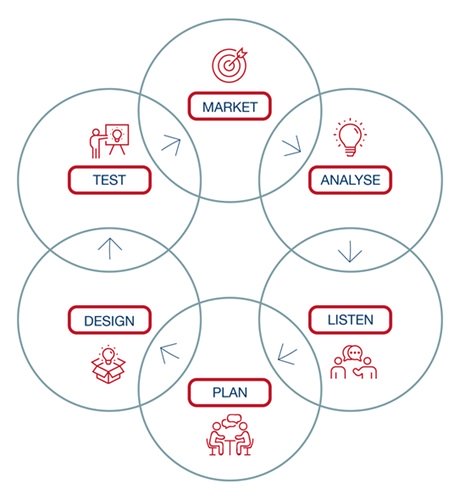
Implementing Account Based Marketing:
- Plan Every Detail: Precisely target your marketing campaigns to resonate with a specific account.
- Align With the Sales Team: Ensure clear communication and shared goals between sales and marketing teams.
- Build a Dedicated Account-Based Team: Focus on building relationships and understanding the needs of each account.
- Focus: Concentrate on two or three high-value accounts to tailor campaigns effectively.
- Work With Decision-Makers Only: Direct resources towards engaging with decision-makers to maximise efficiency.
- Target Warm Prospects Only: Collaborate with the sales team to identify warm targets already familiar with the product or service.
- Test, Measure, Adjust: Regularly measure results and make necessary adjustments to improve campaign effectiveness.
Questions and Answers:
- What is an account-based marketing platform? An account-based marketing platform is a technology that allows scaling of marketing campaigns to narrow audiences.
- Why is account-based marketing important? ABM caters to a specific audience, maximising Return on Investment (ROI) and attracting high-ticket clients, leading to increased client retention and improved company ROI.
- How is ABM used? ABM is used to align marketing and sales teams, bringing in high-value clients and shortening the sales process.
Summary:
Account-based marketing proves advantageous for companies of all sizes, fostering deeper relationships with clients crucial to the bottom line. By targeting specific accounts with a focused approach, businesses can increase client retention and build a strong foundation. Implementing an ABM strategy involves collaboration with the sales team, thorough research, channel selection, regular campaign assessment, and adjustment based on performance indicators.


